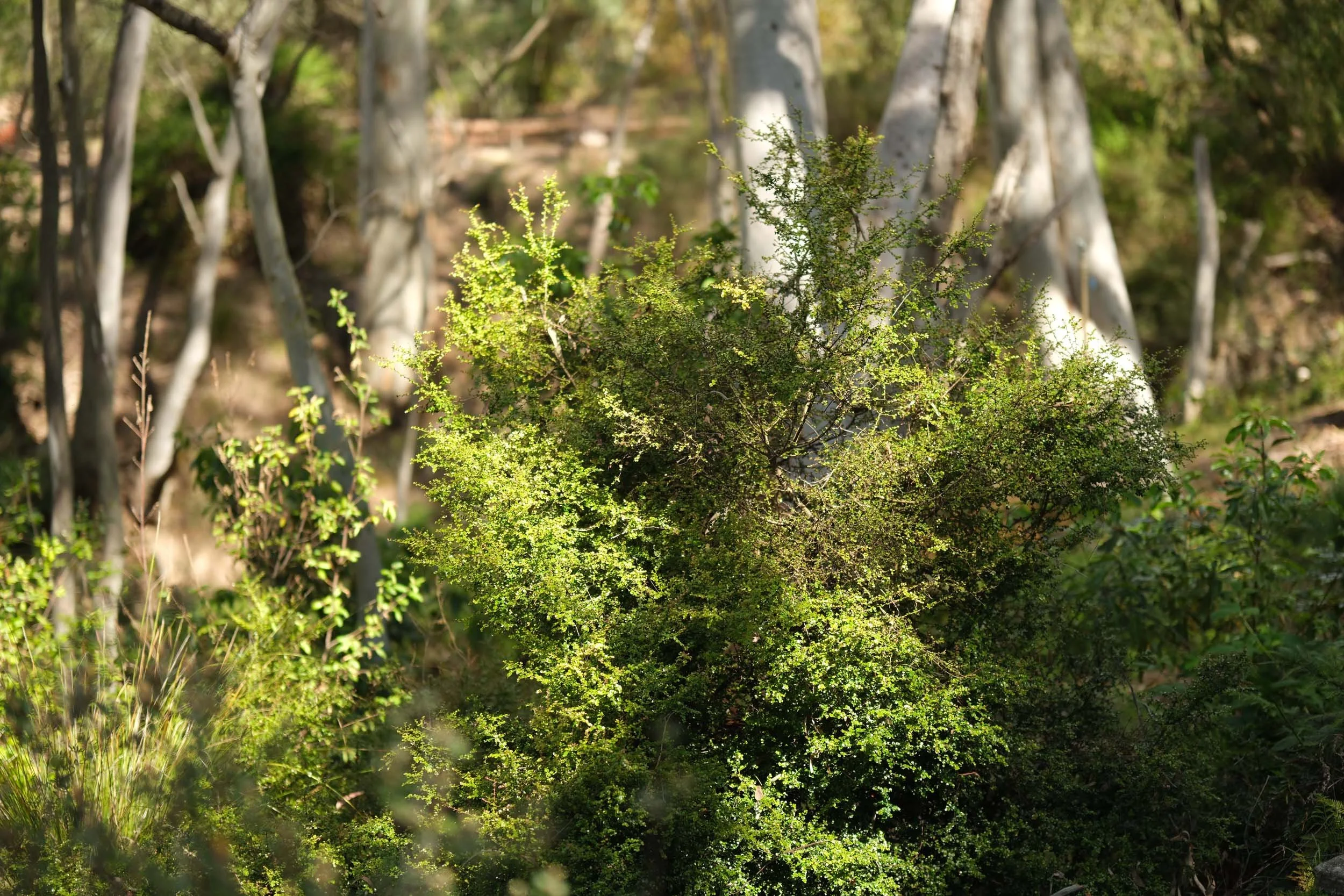
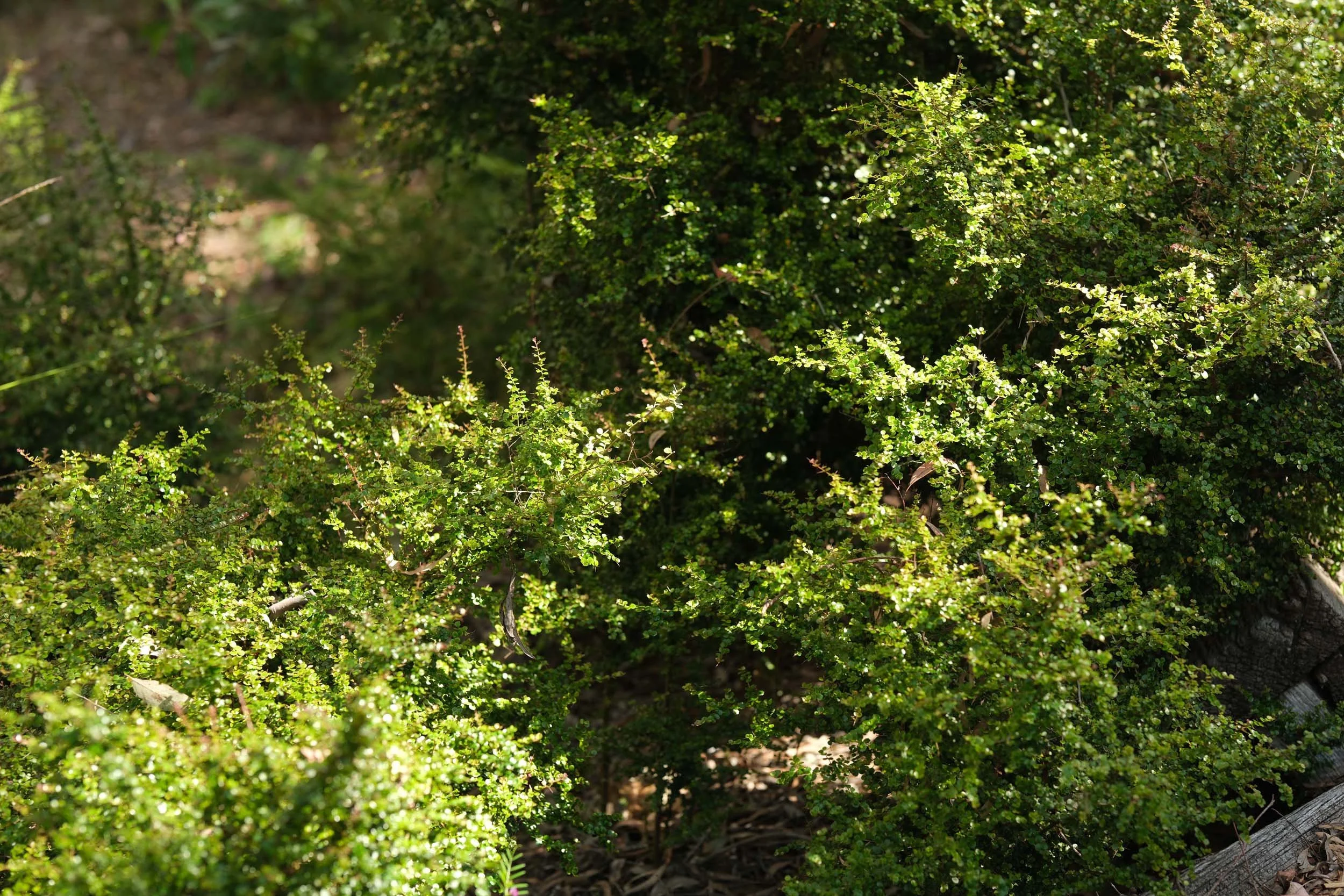
Pittosporum multiflorum [Pittosporaceae]; Orange ThornPittosporum is a genus that probably has its origins in Gondwana, and is known in horticultural circles because of a number of practical and beautiful landscape plants, including Japanese cheesewood (P. tobira) and New Zealand’s kohuhu (Pittosporum tenuifolium). There is also an enormous range of other New Zealand species that generally prove adaptable and useful in the garden.
Pittosporum multiflorum is native to New South Wales and Queensland, predominantly occupying rainforest and wet-sclerophyll forests. I have seen in growing at Strickland State Forest in the Central Coast on damp, shaded slopes (see image below, right). Others have described the plant as having little aesthetic value, but I find it quite beautiful, bearing a visual similarity to so-called ‘divaricating’ plants of New Zealand. There are a variety of forms available at local-provenance nurseries, some more glossy and verdant than others. The forms propagated by Bunya Nursery and planted at the Mt Annan Botanic Gardens are particularly attractive. Its small thorns make it a haven for small bird species, and it responds well to pruning, making it suitable for low hedging or topiary in shade or part-shade, as an alternative to exotic species. We have now used this species in a number of gardens. It is slow growing and remarkably resilient.
Has produced suckers at one project. Deep green in deep shade. Paler green in dappled sun.
Full of spines that are like hypodermic needles, so avoid planting in areas where people will brush against them. Careful when pruning.